

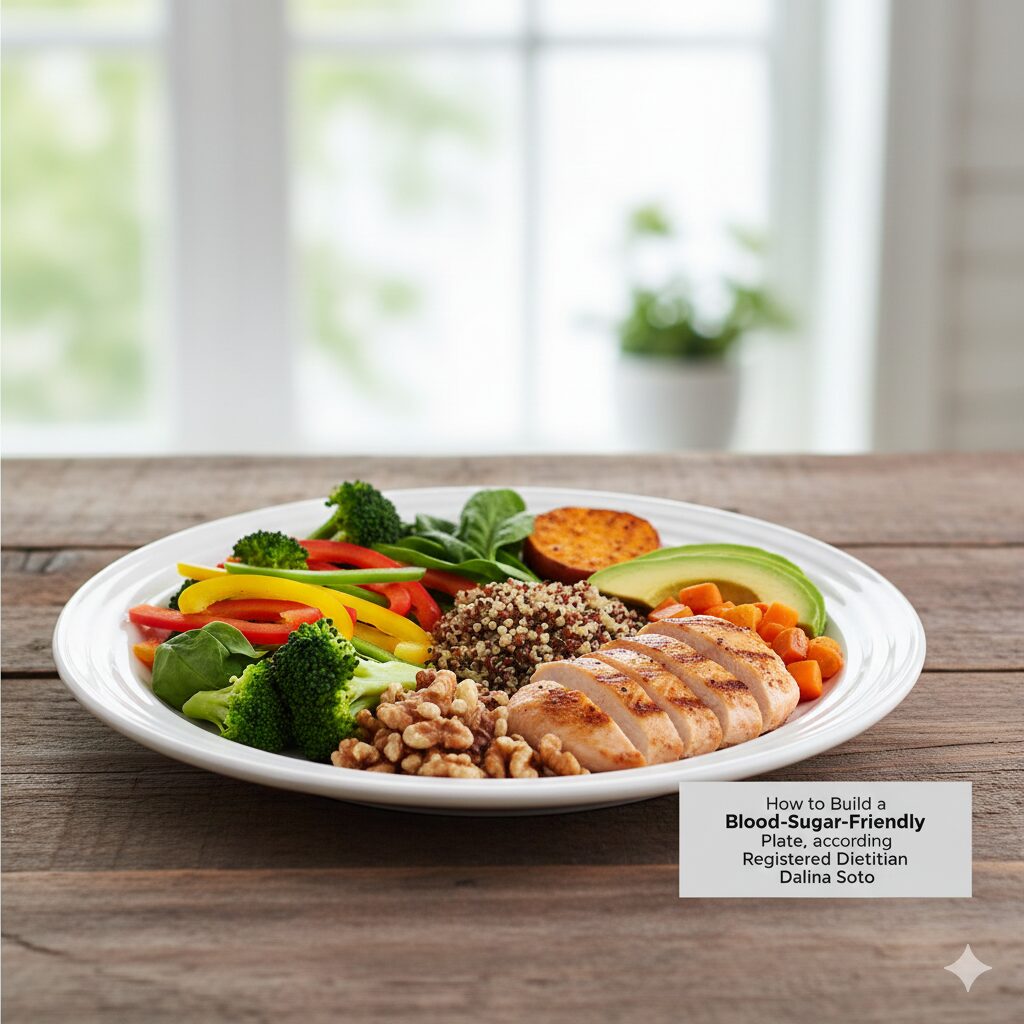

Managing blood sugar doesn’t have to feel restrictive or confusing. According to Registered Dietitian Dalina Soto, it’s all about creating balanced meals that are nourishing, satisfying, and tailored to your lifestyle. In this article, Soto breaks down simple, practical ways to build a blood-sugar-friendly plate without sacrificing the foods you love or feeling deprived. Whether you’re managing diabetes, prediabetes, or simply want to improve your energy levels, this guide will help you make steady, positive changes to your meals.
The Basics: Four Key Components for a Blood-Sugar-Friendly Plate
Dalina Soto is known for her simple, anti-diet approach to nutrition. She emphasizes that building balanced meals doesn’t require tracking every calorie or following strict guidelines. Instead, she encourages focusing on four essential components: protein, carbs, fiber, and fat.
1. Carbohydrates
Carbs are your body’s primary energy source. They help fuel the brain and muscles throughout the day, but managing how they are paired in your meals is key. Avoid simple carbs that cause quick blood sugar spikes; instead, focus on whole, complex carbs that provide steady energy.
2. Protein
Protein helps slow digestion, preventing sharp spikes in blood sugar. It’s also crucial for building and repairing tissues, supporting muscle mass, and keeping you feeling full and satisfied.
3. Fiber
Fiber, found in vegetables, fruits, legumes, and whole grains, slows down the absorption of sugar and promotes digestive and heart health. It also enhances satiety, helping you feel full longer.
4. Healthy Fat
Healthy fats from sources like avocado, olive oil, nuts, and seeds not only help slow digestion but also provide sustained energy and support the absorption of fat-soluble vitamins.
When all four components are included in a meal, blood sugar rises more gently, reducing the chances of energy crashes and hunger pangs.
What Does This Look Like on Your Plate?
Dalina Soto believes that building a blood-sugar-friendly plate doesn’t need to be complex. You don’t need to measure exact grams or obsess over perfect ratios. Instead, focus on balance. Here’s a simple way to think about your meal:
- Carbs: Rice, potatoes, quinoa, oats, bread, tortillas
- Protein: Chicken, fish, tofu, beans, eggs
- Fiber: Vegetables, fruits, legumes, whole grains
- Healthy Fats: Avocado, cheese, nuts, seeds, olive oil
The goal is to ensure that your plate contains a mix of these components for a balanced and satisfying meal.
Start by Adding, Not Taking Away
One of the biggest mistakes people make when managing their blood sugar is focusing on eliminating certain foods. Dalina Soto encourages a different approach: add, don’t subtract. Instead of cutting out foods you love, look for opportunities to add nourishing ingredients that will enhance the overall balance of your plate.
For example:
- Love rice and beans? Add vegetables like spinach or peppers to boost fiber.
- Enjoy breakfast tortillas? Top them with eggs and tomatoes for a boost of protein and fiber.
Dalina explains, “It’s not about perfection; it’s about feeling steady and satisfied after meals.” Small adjustments can have a big impact on your blood sugar, without the need to feel restricted.
Simple Upgrades for Blood-Sugar-Friendly Meals
Making small swaps to your usual meals can help stabilize your blood sugar and make your meals more nourishing. Some easy ideas include:
- Pasta: Add extra veggies or lean protein (like chicken or tofu) to make the meal more balanced.
- Fruit: Pair it with healthy fats like avocado or a handful of nuts to slow digestion.
- Rice: Mix in beans or lentils for added protein and fiber.
- Sandwiches and Wraps: Add greens or sliced veggies to make them more filling and nutrient-dense.
These small additions will make your meals more balanced, keep you full longer, and prevent spikes and crashes in blood sugar.
Blood-Sugar-Friendly Snacks That Keep You Full
Snacking is an important part of maintaining steady energy levels and preventing hunger between meals. However, many packaged snacks are high in refined sugars and low in fiber or protein. Instead of reaching for sugary snacks, Dalina recommends including at least two of the four key components (protein, carbs, fiber, fat) in your snack to help stabilize blood sugar.
Some of Dalina’s favorite blood-sugar-friendly snacks include:
- Banana with peanut butter
- String cheese with crackers
- Yogurt with fresh fruit
- Apple slices with cheddar cheese
- Carrot sticks with hummus
- Hard-boiled eggs and a clementine
These snacks provide balanced energy and help prevent mid-afternoon slumps or late-night hunger.
Practice Curiosity, Not Judgment
Dalina Soto encourages a compassionate, curious approach when managing blood sugar. It’s easy to feel defeated when a blood sugar reading is higher than expected, but Dalina reminds us that fluctuations are normal, and they’re an opportunity to learn.
“If a meal spikes your blood sugar, it’s not a failure, it’s information,” Dalina says. Instead of focusing on “perfect” meals, she helps her clients adopt a mindset of experimentation. Try different meal pairings, adjust meal timing, or add more fiber-rich foods. Understanding patterns over time, rather than obsessing over individual numbers, is key to sustainable blood-sugar management.
Start Small: One Step at a Time
For those newly diagnosed with diabetes or prediabetes, the flood of information can be overwhelming. Dalina encourages people to start with one simple change, such as adding more fiber to their meals. This could be as simple as adding a serving of vegetables or a few slices of avocado to a dish you already enjoy.
“You don’t have to change everything overnight,” Dalina advises. “Small, consistent changes make the biggest difference for blood sugar and peace of mind.”
Debunking Common Myths
There are several myths about managing blood sugar that can add confusion to the process. The biggest myth, according to Dalina, is the idea that carbs are the enemy. Carbohydrates are essential to our diet, and when managed correctly, they can be part of a healthy, blood-sugar-friendly meal plan.
Another misconception is that there is a one-size-fits-all diet for people with diabetes. “Everyone’s body and culture are different,” Dalina explains. Your meals should reflect your unique preferences, lifestyle, and cultural foods.
Eating Your Cultural Foods Without Guilt
Dalina Soto is passionate about helping people enjoy their cultural foods without guilt or shame. Many traditional dishes are packed with nutrition, and there’s no need to eliminate them from your diet in order to manage blood sugar. By pairing them with protein, fiber, or healthy fats, you can enjoy your favorite meals while keeping your blood sugar in check.
“Food is part of our culture and joy,” Dalina says. “It’s not something to earn or fear.” Eating mindfully and savoring the flavors of your heritage can be part of a blood-sugar-friendly meal plan.
Final Thoughts
Building a blood-sugar-friendly plate doesn’t require restriction, extreme precision, or complicated math. By focusing on balance—protein, carbs, fat, and fiber—you can enjoy nourishing meals that support steady energy and blood sugar stability.
As Dalina Soto reminds us, managing blood sugar is about caring for your whole body, not chasing perfect numbers. With a little practice, you can find balance, satisfaction, and empowerment in your meals, without the stress of dieting or restrictive eating.